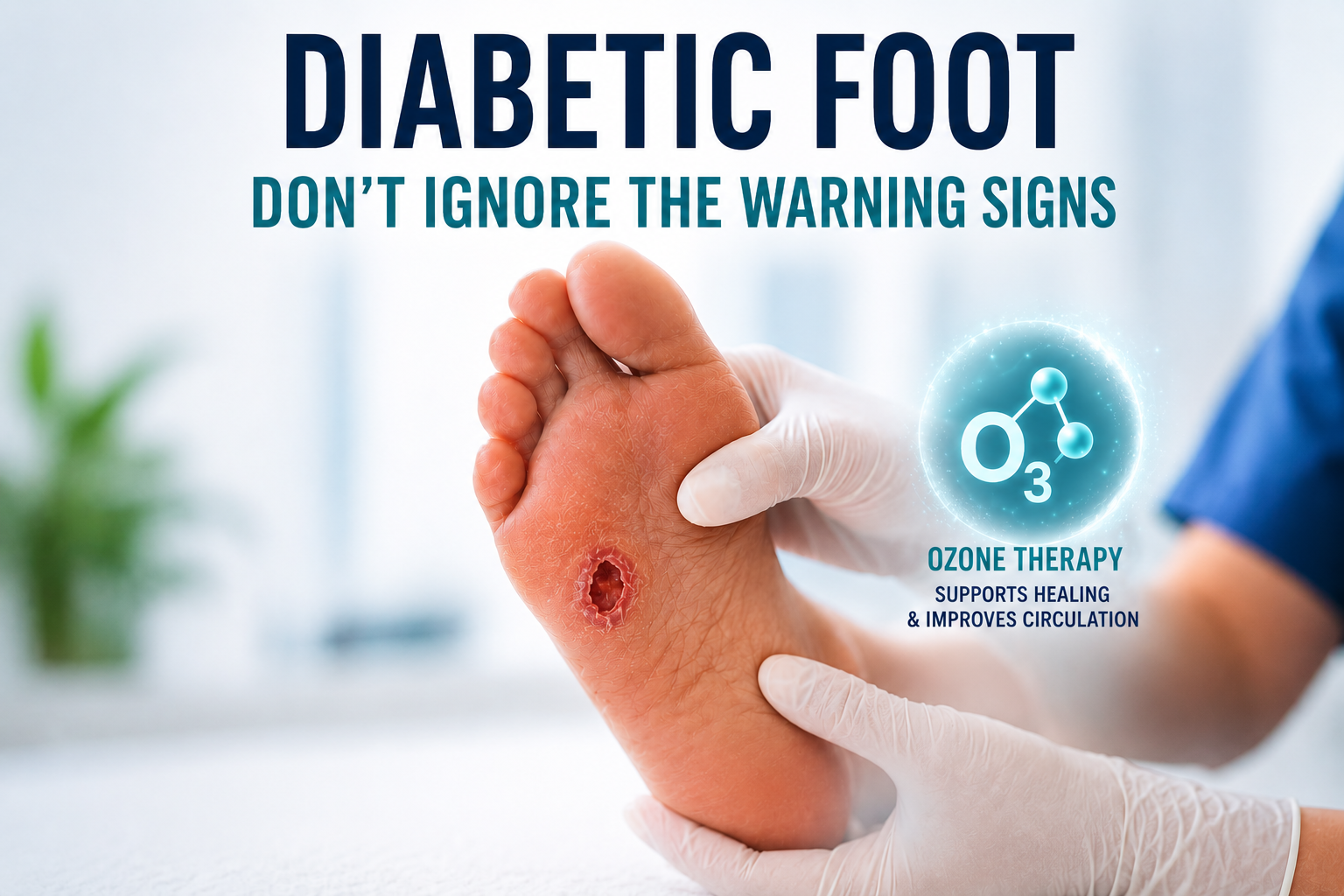
Diabetic Foot: Symptoms, Care, Treatment, and the Role of Ozone Therapy
Diabetic foot syndrome is one of the most serious complications of diabetes mellitus. Without proper care and timely treatment, it can lead to chronic wounds, infections, tissue damage, and even amputation. The good news is that early diagnosis, regular foot care, and comprehensive treatment can significantly reduce these risks.
What Is a Diabetic Foot?
Diabetic foot syndrome develops when prolonged high blood sugar levels damage blood vessels and nerves. As a result, circulation becomes impaired, sensation decreases, and the body's natural healing processes slow down.
Even a small cut, blister, callus, or crack in the skin may develop into a non-healing wound or diabetic foot ulcer.
For this reason, people living with diabetes should pay close attention to the health of their feet and seek medical attention at the first signs of a problem.
Why Is Diabetic Foot Dangerous?
One of the biggest dangers of diabetic foot syndrome is that it often progresses silently. Reduced sensation means patients may not notice injuries until significant damage has already occurred.
Without appropriate treatment, diabetic foot complications may include:
Signs and Symptoms of Diabetic Foot
You should seek medical evaluation if you experience:
Diabetic Foot Care
Proper daily foot care is essential for preventing complications.
Recommended measures include:
Treatment of Diabetic Foot Syndrome
Successful diabetic foot treatment requires a comprehensive approach tailored to each patient's condition.
Treatment may include:
Ozone Therapy for Diabetic Foot
Ozone therapy is increasingly used as a supportive treatment in comprehensive diabetic foot care.
It is important to understand that ozone therapy does not replace standard medical treatment. Instead, it serves as an adjunctive therapy that may help support tissue healing and improve circulation.
One of the major challenges in diabetic foot syndrome is poor microcirculation and reduced oxygen delivery to tissues. Medical ozone therapy may help improve blood flow, enhance oxygen utilization, and support the body's natural regenerative processes.
Potential benefits of ozone therapy as part of a comprehensive diabetic foot treatment plan include:
Why Early Treatment Matters
Diabetic foot complications rarely occur overnight. The body often provides warning signs long before serious damage develops.
Dry skin, numbness, tingling, cracks, and small wounds should never be ignored.
Early diagnosis and comprehensive diabetic foot treatment can help prevent ulcers, infections, gangrene, and amputation while preserving mobility and quality of life.
If you have diabetes and notice any changes in your feet, schedule a professional evaluation as soon as possible. Early intervention remains the most effective way to protect your health and maintain an active lifestyle.
Diabetic foot syndrome is one of the most serious complications of diabetes mellitus. Without proper care and timely treatment, it can lead to chronic wounds, infections, tissue damage, and even amputation. The good news is that early diagnosis, regular foot care, and comprehensive treatment can significantly reduce these risks.
What Is a Diabetic Foot?
Diabetic foot syndrome develops when prolonged high blood sugar levels damage blood vessels and nerves. As a result, circulation becomes impaired, sensation decreases, and the body's natural healing processes slow down.
Even a small cut, blister, callus, or crack in the skin may develop into a non-healing wound or diabetic foot ulcer.
For this reason, people living with diabetes should pay close attention to the health of their feet and seek medical attention at the first signs of a problem.
Why Is Diabetic Foot Dangerous?
One of the biggest dangers of diabetic foot syndrome is that it often progresses silently. Reduced sensation means patients may not notice injuries until significant damage has already occurred.
Without appropriate treatment, diabetic foot complications may include:
- Chronic diabetic foot ulcers
- Skin and soft tissue infections
- Deep tissue and bone involvement
- Gangrene
- Partial or complete limb amputation
Signs and Symptoms of Diabetic Foot
You should seek medical evaluation if you experience:
- Numbness in the feet
- Tingling or burning sensations
- Reduced sensitivity
- Dry skin and cracks
- Changes in skin color
- Slow-healing wounds
- Foot ulcers
- Foot deformities
- Pain while walking or at rest
Diabetic Foot Care
Proper daily foot care is essential for preventing complications.
Recommended measures include:
- Inspecting the feet every day
- Washing and drying feet thoroughly
- Using moisturizers to prevent skin cracking
- Maintaining proper nail care
- Wearing comfortable, well-fitting shoes
- Avoiding walking barefoot
- Seeking prompt medical attention for any skin injury
Treatment of Diabetic Foot Syndrome
Successful diabetic foot treatment requires a comprehensive approach tailored to each patient's condition.
Treatment may include:
- Blood glucose management
- Vascular assessment and support
- Wound and ulcer care
- Infection prevention and treatment
- Professional diabetic foot care
- Lifestyle and nutritional recommendations
- Additional therapies aimed at improving circulation and tissue recovery
Ozone Therapy for Diabetic Foot
Ozone therapy is increasingly used as a supportive treatment in comprehensive diabetic foot care.
It is important to understand that ozone therapy does not replace standard medical treatment. Instead, it serves as an adjunctive therapy that may help support tissue healing and improve circulation.
One of the major challenges in diabetic foot syndrome is poor microcirculation and reduced oxygen delivery to tissues. Medical ozone therapy may help improve blood flow, enhance oxygen utilization, and support the body's natural regenerative processes.
Potential benefits of ozone therapy as part of a comprehensive diabetic foot treatment plan include:
- Improved microcirculation
- Enhanced tissue oxygenation
- Support for wound healing and tissue repair
- Reduction of inflammatory processes
- Improved metabolic function
- Overall support for recovery and wellness
Why Early Treatment Matters
Diabetic foot complications rarely occur overnight. The body often provides warning signs long before serious damage develops.
Dry skin, numbness, tingling, cracks, and small wounds should never be ignored.
Early diagnosis and comprehensive diabetic foot treatment can help prevent ulcers, infections, gangrene, and amputation while preserving mobility and quality of life.
If you have diabetes and notice any changes in your feet, schedule a professional evaluation as soon as possible. Early intervention remains the most effective way to protect your health and maintain an active lifestyle.