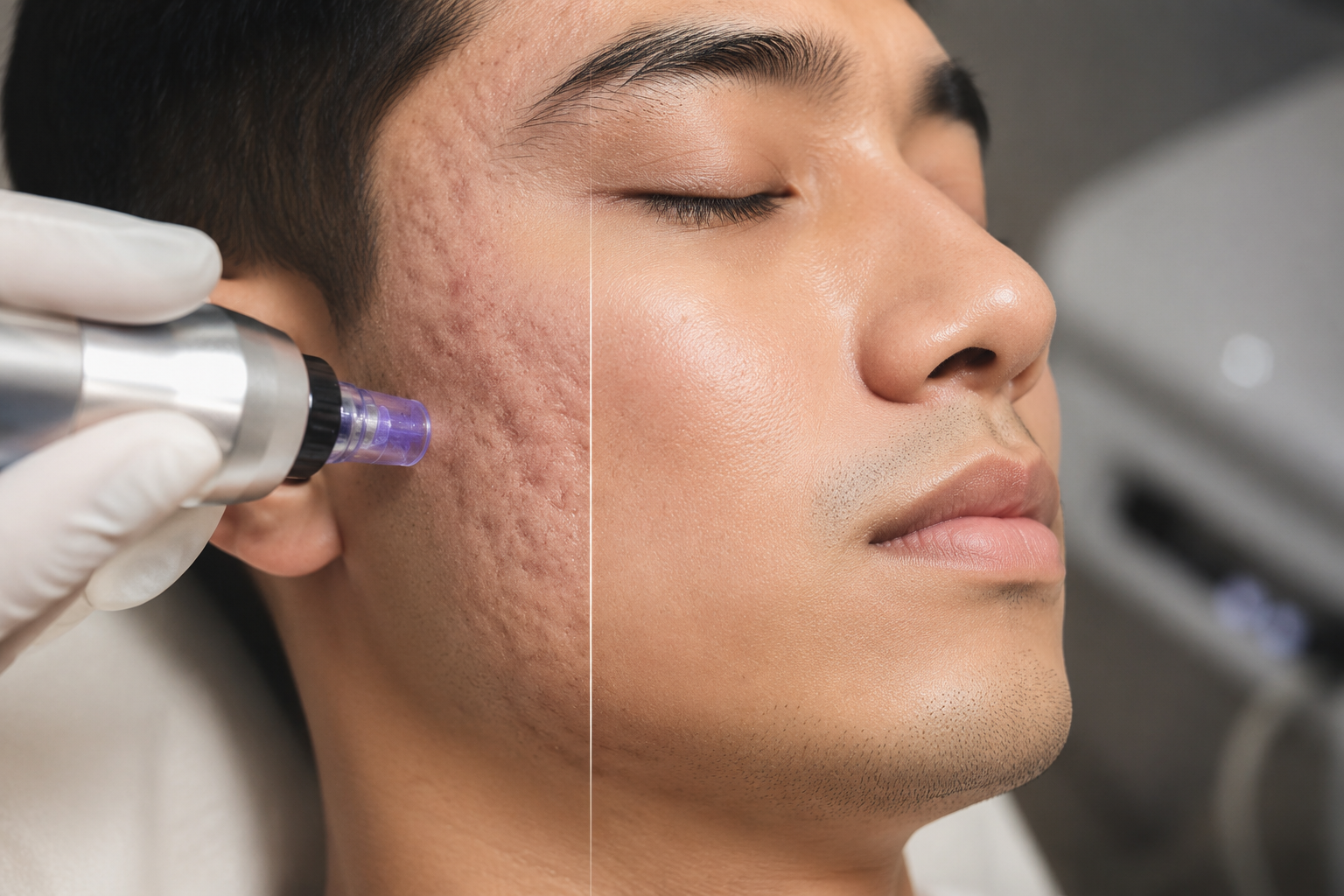
Acne Scar Treatment in Phnom Penh: Modern Approaches to Skin Texture and Collagen Remodeling
Acne may eventually heal, but for many patients the skin changes remain long after inflammation disappears.
Post-acne scars, uneven skin texture, enlarged pores, and persistent skin irregularities can affect overall skin appearance and confidence for years. Modern aesthetic medicine now offers a variety of minimally invasive procedures designed to improve acne scars and support long-term skin regeneration.
At IQMED Center Phnom Penh, acne scar treatment protocols are individualized according to scar type, skin condition, and long-term skin rejuvenation goals.
Why acne scars develop
Acne scars usually form when inflammation affects deeper layers of the skin.
During the healing process, collagen structure may become disrupted, leading to visible skin depressions, uneven texture, or tethered scar tissue.
Different types of acne scars may include:
Modern acne scar treatment approaches
Modern acne scar therapy often combines several procedures designed to target different layers of the skin and support collagen remodeling.
Depending on the skin condition and scar type, treatment protocols may include:
What is RF microneedling for acne scars?
RF microneedling combines microneedles with radiofrequency energy delivered into deeper layers of the skin.
The procedure is designed to stimulate collagen remodeling and support skin renewal while minimizing excessive surface damage.
In acne scar treatment, RF microneedling is commonly used to help:
What is subcision?
Subcision is a minimally invasive procedure commonly used for tethered or depressed acne scars.
During the procedure, a specialized instrument is used beneath the skin to release fibrotic scar attachments that pull the skin downward.
This technique may help improve rolling acne scars and support collagen remodeling in treated areas.
Subcision is frequently combined with other procedures such as RF microneedling or regenerative skin therapies as part of a comprehensive acne scar treatment plan.
Why collagen remodeling is important
One of the main goals of acne scar treatment is long-term collagen remodeling.
Collagen plays a major role in skin structure and texture. Modern acne scar procedures are designed not only to improve visible surface irregularities, but also to support gradual skin regeneration processes over time.
Because collagen remodeling develops progressively, acne scar improvement is usually gradual rather than immediate.
For this reason, treatment protocols are often performed as a course over multiple sessions.
Can acne scars be completely removed?
In aesthetic medicine, the goal is usually significant improvement rather than absolute perfection.
The degree of improvement depends on:
What concerns can acne scar procedures help improve?
Modern acne scar treatment protocols are commonly used to help improve:
What does recovery involve?
Recovery time depends on the selected procedures and treatment intensity.
Temporary redness, swelling, sensitivity, peeling, or mild irritation may occur after treatment and usually improve progressively during the recovery period.
Patients are typically advised to:
How many sessions are usually recommended?
Acne scar improvement usually requires a course of procedures rather than a single treatment.
The number of sessions depends on:
Acne scar treatment at IQMED Phnom Penh
At IQMED Center Phnom Penh, acne scar treatment protocols are individualized according to scar type, skin condition, and aesthetic goals.
The approach focuses on:
Conclusion
Modern acne scar treatment has evolved far beyond aggressive resurfacing procedures alone.
Today, minimally invasive collagen stimulation, RF microneedling, subcision, and regenerative skin revitalization techniques allow more individualized approaches to post-acne skin improvement.
For patients looking to improve uneven skin texture, support long-term collagen remodeling, and reduce visible post-acne irregularities, modern acne scar therapy may become an important part of long-term skin rejuvenation and skin quality restoration.
Acne may eventually heal, but for many patients the skin changes remain long after inflammation disappears.
Post-acne scars, uneven skin texture, enlarged pores, and persistent skin irregularities can affect overall skin appearance and confidence for years. Modern aesthetic medicine now offers a variety of minimally invasive procedures designed to improve acne scars and support long-term skin regeneration.
At IQMED Center Phnom Penh, acne scar treatment protocols are individualized according to scar type, skin condition, and long-term skin rejuvenation goals.
Why acne scars develop
Acne scars usually form when inflammation affects deeper layers of the skin.
During the healing process, collagen structure may become disrupted, leading to visible skin depressions, uneven texture, or tethered scar tissue.
Different types of acne scars may include:
- atrophic scars
- rolling scars
- boxcar scars
- ice-pick scars
- post-inflammatory skin irregularities
- enlarged pores and uneven texture
Modern acne scar treatment approaches
Modern acne scar therapy often combines several procedures designed to target different layers of the skin and support collagen remodeling.
Depending on the skin condition and scar type, treatment protocols may include:
- RF microneedling
- subcision
- collagen stimulation procedures
- regenerative skin revitalization
- skin resurfacing techniques
- supportive post-acne skin therapies
What is RF microneedling for acne scars?
RF microneedling combines microneedles with radiofrequency energy delivered into deeper layers of the skin.
The procedure is designed to stimulate collagen remodeling and support skin renewal while minimizing excessive surface damage.
In acne scar treatment, RF microneedling is commonly used to help:
- improve uneven skin texture
- support collagen regeneration
- reduce visible post-acne irregularities
- improve enlarged pores
- smooth scarred skin areas over time
What is subcision?
Subcision is a minimally invasive procedure commonly used for tethered or depressed acne scars.
During the procedure, a specialized instrument is used beneath the skin to release fibrotic scar attachments that pull the skin downward.
This technique may help improve rolling acne scars and support collagen remodeling in treated areas.
Subcision is frequently combined with other procedures such as RF microneedling or regenerative skin therapies as part of a comprehensive acne scar treatment plan.
Why collagen remodeling is important
One of the main goals of acne scar treatment is long-term collagen remodeling.
Collagen plays a major role in skin structure and texture. Modern acne scar procedures are designed not only to improve visible surface irregularities, but also to support gradual skin regeneration processes over time.
Because collagen remodeling develops progressively, acne scar improvement is usually gradual rather than immediate.
For this reason, treatment protocols are often performed as a course over multiple sessions.
Can acne scars be completely removed?
In aesthetic medicine, the goal is usually significant improvement rather than absolute perfection.
The degree of improvement depends on:
- scar type
- scar depth
- skin condition
- treatment consistency
- individual healing response
- collagen activity
What concerns can acne scar procedures help improve?
Modern acne scar treatment protocols are commonly used to help improve:
- uneven skin texture
- depressed acne scars
- post-acne irregularities
- enlarged pores
- rough skin surface
- skin texture changes after acne inflammation
- visible scar-related skin unevenness
What does recovery involve?
Recovery time depends on the selected procedures and treatment intensity.
Temporary redness, swelling, sensitivity, peeling, or mild irritation may occur after treatment and usually improve progressively during the recovery period.
Patients are typically advised to:
- avoid excessive sun exposure
- follow post-procedure skin care recommendations
- use appropriate skin protection
- avoid aggressive skin irritation during recovery
How many sessions are usually recommended?
Acne scar improvement usually requires a course of procedures rather than a single treatment.
The number of sessions depends on:
- scar severity
- skin condition
- procedure type
- collagen response
- long-term treatment goals
Acne scar treatment at IQMED Phnom Penh
At IQMED Center Phnom Penh, acne scar treatment protocols are individualized according to scar type, skin condition, and aesthetic goals.
The approach focuses on:
- collagen remodeling support
- minimally invasive skin rejuvenation
- modern skin resurfacing techniques
- combination treatment protocols
- long-term skin quality improvement
Conclusion
Modern acne scar treatment has evolved far beyond aggressive resurfacing procedures alone.
Today, minimally invasive collagen stimulation, RF microneedling, subcision, and regenerative skin revitalization techniques allow more individualized approaches to post-acne skin improvement.
For patients looking to improve uneven skin texture, support long-term collagen remodeling, and reduce visible post-acne irregularities, modern acne scar therapy may become an important part of long-term skin rejuvenation and skin quality restoration.